












How Haptic Suits Enhance Your Casino Experience

As we navigate the sophisticated digital landscape of 2026, the transition from two-dimensional interfaces to full-body immersion has redefined our understanding of engagement. I have watched the evolution of the casino online industry move from pixelated slots to virtual reality, but the true breakthrough occurred when we began to engage the human sense of touch. Haptic suits have transformed the player from a passive observer into a physically present participant, allowing for a level of sensory feedback that was previously limited to brick-and-mortar establishments. By bridging the gap between the digital and the physical, we have created an environment where the weight of a chip and the rumble of a slot machine are felt through the skin, creating a neurobiological connection that makes the virtual world undeniably real.

The Sensory Architecture of 2026

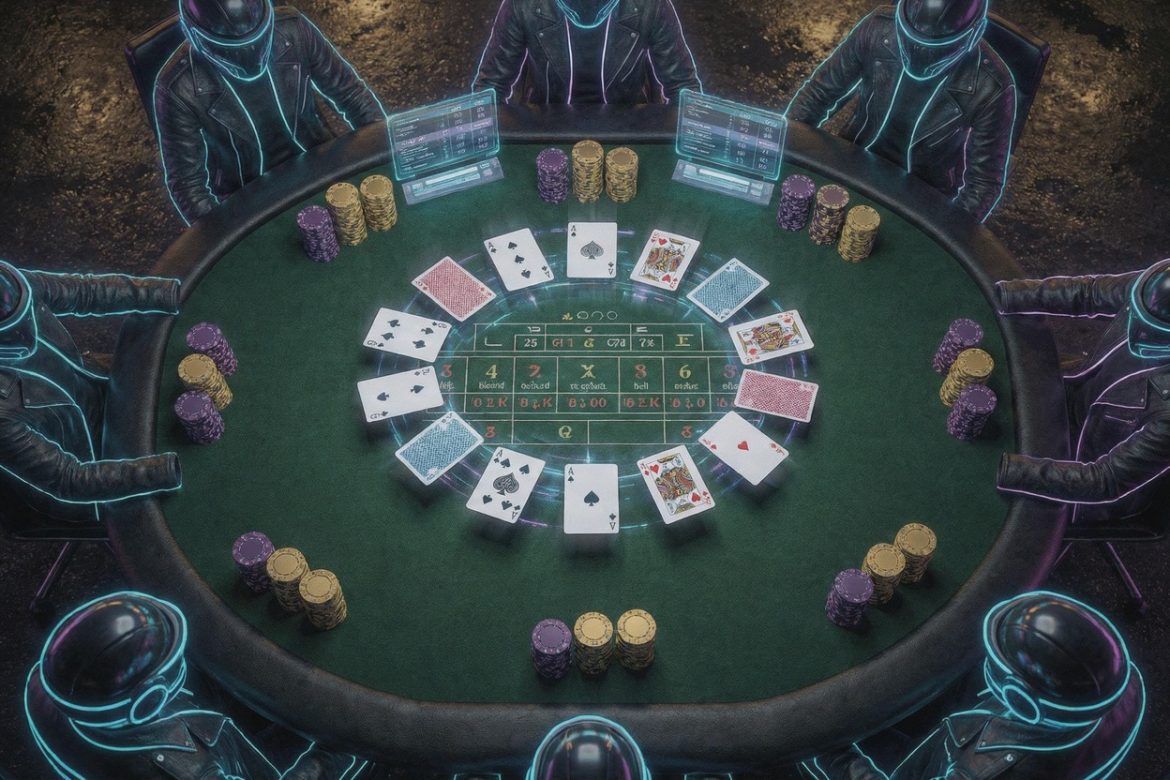
The year 2026 marks the era of “Sensory Architecture,” where we build games not just for the eyes and ears, but for the entire nervous system. In my years as a representative for this sector, I have found that the missing piece of the immersion puzzle was always the tactile void. You could see the cards, you could hear the dealer, but you could not feel the friction of the felt table. Haptic suits have changed that. These wearable devices use a combination of vibrotactile actuators, micro-fluidic pressure systems, and thermal pads to mimic the physical sensations of a luxury gaming hall.

Read More

Provably Fair 2.0: The New Trust Standard

As a pioneer in the digital wagering space, I have watched the concept of trust evolve from a marketing slogan into a hard-coded mathematical certainty. In 2026, the industry has undergone a radical purge of opacity. The old days of “black box” algorithms, where players had to take a platform’s word for its integrity, are effectively over. We have entered the era of Provably Fair 2.0, a suite of cryptographic protocols that ensure every spin, shuffle, and roll is verified in real-time, not just for the player, but by an immutable network of global observers. For modern online casinos, adopting this standard is no longer a luxury; it is the baseline requirement for any operator wishing to survive in an age where the player holds the cryptographic keys to verify every single outcome. I am proud to lead the implementation of these protocols, moving beyond the clunky hash-verifiers of the past into a seamless, symbiotic trust model.

The Failure of Provably Fair 1.0

To understand why we moved to 2.0, we must acknowledge the limitations of its predecessor. Provably Fair 1.0 was a revolutionary step, introduced in the early days of crypto-gambling. It relied on a simple commitment scheme: a server seed, a client seed, and a nonce. While mathematically sound, it was functionally reactive. A player had to manually copy hashes into a third-party verifier after their session to see if they had been cheated. In my experience, less than 1% of players actually did this. It was “transparency” that required too much homework.

Read More

AI Tutors: Learning Poker with Artificial Intelligence

As we stand in the landscape of 2026, I have witnessed a total metamorphosis in the way skill-based gaming is consumed and mastered. The era of reading dry strategy books or watching static masterclass videos is behind us, replaced by an era of sentient-like pedagogical systems. Today, the most effective way to ascend from a novice to a seasoned strategist is by engaging with a dedicated AI mentor that understands your specific cognitive biases. These systems have revolutionized the way enthusiasts approach poker, providing a safe, hyper-intelligent environment where the mathematical complexities of the game are decoded through conversational interaction and real-time heuristic analysis. As a representative of this evolving industry, I am proud to showcase how we have turned a daunting learning curve into a personalized journey of intellectual mastery.

The Shift from Static Solvers to Conversational Mentors

In the early 2020s, the best tools we had were “solvers”-software that required a PhD to operate and hours to run single scenarios. I saw how this created a massive divide between professional players and recreational fans. In 2026, we have bridged that gap. Our AI Tutors are no longer just calculators; they are conversational partners. They do not just tell you that you made a mistake; they explain the “why” in a language you understand, using your past hand history as a reference point to highlight recurring patterns in your decision-making.

Read More

Biometric Security: Protecting Your Payouts

As a lead security architect in the digital wagering industry, I have watched the arms race between hackers and platforms reach a fever pitch in 2026. The days of relying on “strong passwords” or even basic SMS two-factor authentication are long dead, buried by the emergence of hyper-capable AI that can crack traditional credentials in seconds. Today, the cornerstone of our defense is the human body itself. We have transitioned into an era where your anatomy is your ultimate private key. By integrating sophisticated biometric layers, we ensure that casino security is no longer a barrier you have to remember, but a biological certainty that follows you wherever you go. I am here to detail how we utilize your unique physical signatures to guarantee that when you win big, the payout reaches only your hands and no one else’s.

The Obsolescence of Digital Credentials

I remember the era when players were frustrated by forgotten passwords and lost recovery codes. From a security standpoint, it was a nightmare. Humans are the weakest link in any digital chain; they reuse passwords, fall for phishing, and share accounts. In 2026, we have removed this human error entirely. We no longer ask you what you know; we ask who you are. The shift to biometric-first architecture was not just about convenience; it was a necessary response to the rise of automated account takeover bots.

Read More